
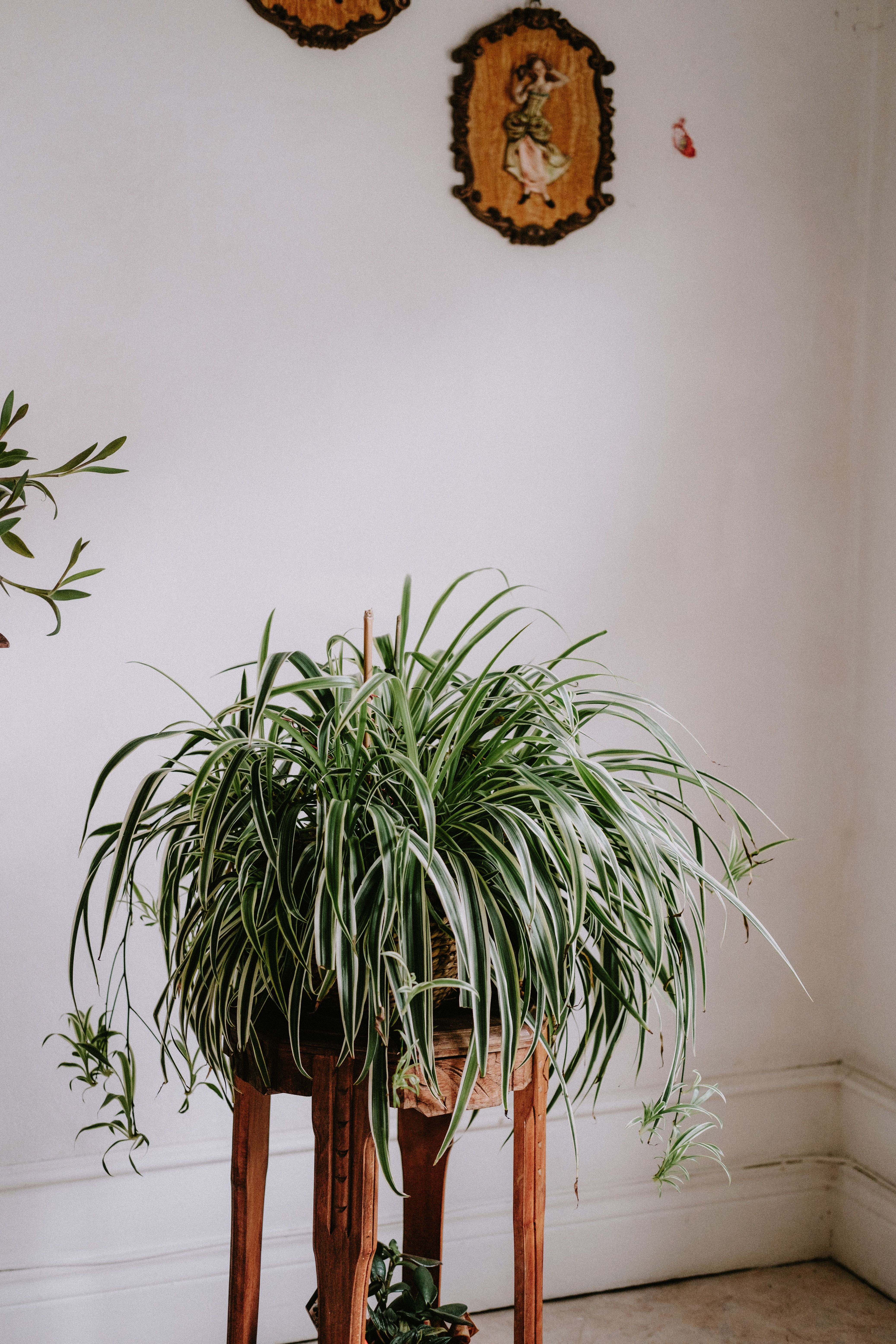
Spider Plant Care
(And Why We’re a Little Biased)
Spider plants are how this whole shop happened. One curly spider plant, covered in babies, and twenty-five propagated plants later. Here we are. If you’re new to plants, this is a wonderful place to start. If you’ve been at it a while, this is the plant that never stops giving you more to work with.
Light Bright, indirect light is ideal. A few feet back from a sunny window works well. They’ll survive in lower light too, just with slower growth and less of that curling, cascading shape they’re known for.
Water Water when the top inch or two of soil is dry, roughly once a week, less in winter. Spider plants are fairly forgiving, but they’ll tell you when they’re thirsty: leaf tips start browning if they’ve gone too long without water, or if your tap water has a lot of fluoride/chlorine (letting water sit out overnight before using it helps).
Soil & Potting Any well-draining potting mix works. Spider plants like being slightly root-bound and will actually flower and produce more “babies” (technically called plantlets, or spiderettes) when a little snug in their pot.
Common Problems
- Brown leaf tips → usually tap water minerals, low humidity, or under/overwatering. Not usually serious.
- Pale, washed-out leaves → too much direct sun.
- No babies forming → spider plants typically need to mature and get slightly root-bound before they’ll start producing plantlets. Patience.
Propagation This is the fun part. Once your plant sends out those long stems with baby plantlets on the end, you can either let them root while still attached (place a small pot of soil under the baby and pin it down) or snip them off and root in water for a couple weeks before potting up.
Pet Safety Non-toxic to cats and dogs. One of the few trailing plants that’s fully pet-safe, which makes it a favorite for anyone with a curious cat that likes to chew.
This is the plant behind our name. Come find one (or a whole baby-covered mother plant) on the bar.
Leave a Reply